How Progressive Jackpot Mechanics Influence Decision Patterns Among Regular Participants Across Networked Card Platforms
Ines Beck · Jul 14, 2026

How Progressive Jackpot Mechanics Influence Decision Patterns Among Regular Participants Across Networked Card Platforms
Networked card platforms have integrated progressive jackpot systems that link multiple tables and sites into shared prize pools, and these mechanics create measurable shifts in how regular participants approach betting choices and session planning. Data compiled through platform analytics reveal consistent patterns where players adjust their strategies once jackpot levels cross certain thresholds, often prioritizing contribution rates over standard hand-value calculations.
Mechanics Behind Networked Progressive Systems
Progressive jackpots in card environments accumulate through a small percentage taken from each qualifying wager, then distribute across connected rooms or regions so that growth occurs in real time for everyone logged in. Operators configure contribution percentages typically between one and five percent, which means every additional participant increases the visible meter and simultaneously raises the potential payout for those already seated. This structure differs from fixed jackpot formats because the prize pool never resets to a static base until someone hits the required combination, creating continuous upward pressure visible on player screens.
Platform operators track contribution data separately from regular rake, allowing them to isolate how jackpot growth correlates with changes in average bet size and session length. Reports from regulatory filings show that when meters reach mid-range levels, activity metrics climb across participating networks, with players extending playtime to maintain eligibility for the accumulating prize.
Observed Shifts in Betting and Risk Assessment
Regular participants demonstrate altered decision trees once progressive meters become prominent on their interfaces. Instead of adhering strictly to pre-jackpot optimal strategies, many increase wager amounts on side bets or bonus rounds that feed the progressive pool, even when those options carry higher house edges. Analysts reviewing transaction logs note that bet sizing distributions widen during periods of rapid jackpot growth, with clusters of larger wagers appearing at tables where the meter displays accelerated climbs.
Researchers examining behavioral datasets have documented instances where participants fold hands they would normally continue in non-progressive settings, choosing instead to conserve chips for future rounds that might coincide with even larger prize levels. This pattern emerges most clearly among players with established account histories spanning multiple months, suggesting experience with the system reinforces the tendency to treat the jackpot as a variable worth factoring into each decision cycle.
Network Effects and Cross-Platform Participation
Because progressive systems connect separate card rooms, participants gain visibility into activity occurring outside their immediate table or site, which influences timing decisions around when to join or leave sessions. Usage spikes often align with publicized meter milestones, and platform logs from July 2026 indicate that coordinated promotions highlighting network-wide totals drew measurable increases in concurrent users across linked environments. Those who study participation graphs observe that players migrate toward rooms advertising the highest current meters, even when table stakes or game variants remain comparable to their usual preferences.
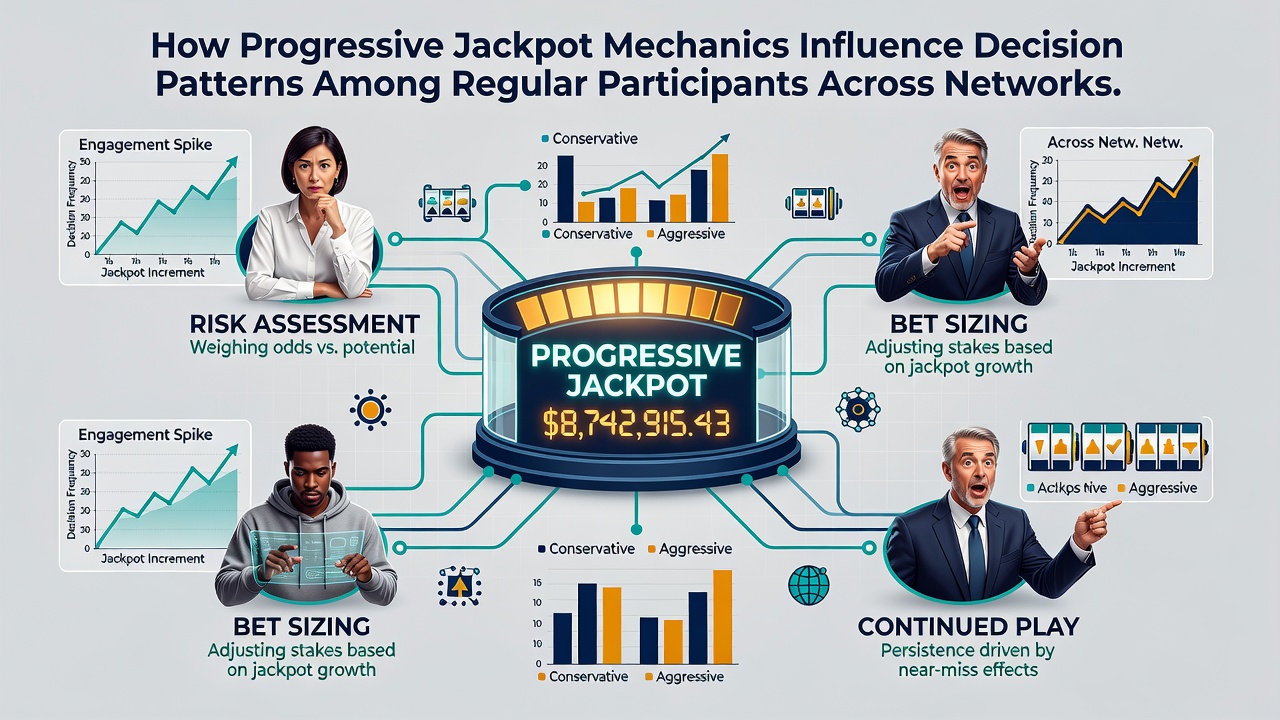
Geographic distribution of contributors also broadens under networked mechanics, as participants from different time zones enter during off-peak local hours to chase visible growth elsewhere. Industry reports compiled by bodies such as the Nevada Gaming Control Board document these cross-regional flows through aggregated handle figures, showing how progressive linkage expands the effective player pool beyond single-jurisdiction boundaries.
Data Patterns from Platform Analytics
Longitudinal studies of regular users reveal that decision latency shortens when progressive meters accelerate, with fewer pauses between actions once the prize exceeds previously observed maxima. Session recordings indicate players review fewer strategy aids or external references during these periods, opting for quicker commitment to hands that maintain eligibility. Figures released through academic partnerships with gaming operators demonstrate that variance in individual player returns increases under progressive conditions, driven by the larger but rarer payouts rather than changes in base game outcomes.
Comparative analysis across non-networked and networked card variants further isolates the jackpot component as a driver of these shifts, since core rules and payout tables stay constant while only the progressive layer changes. Observers examining multi-site datasets note that players who split time between both formats revert to tighter decision patterns when the progressive incentive disappears, confirming the mechanic's direct role in reshaping engagement rhythms.
Conclusion
Progressive jackpot mechanics embedded in networked card platforms generate distinct alterations in participant decision patterns, visible through bet sizing adjustments, session extensions, and cross-platform migration. Platform data and regulatory records continue to map these effects as networks expand, providing operators and analysts with clearer models for predicting activity around meter thresholds. The interplay between shared prize growth and individual choices remains a central element shaping participation across these environments.