Unpacking how seasonal weather patterns correlate with usage spikes in remote poker platforms across different continents
Ines Beck · May 26, 2026
Unpacking how seasonal weather patterns correlate with usage spikes in remote poker platforms across different continents
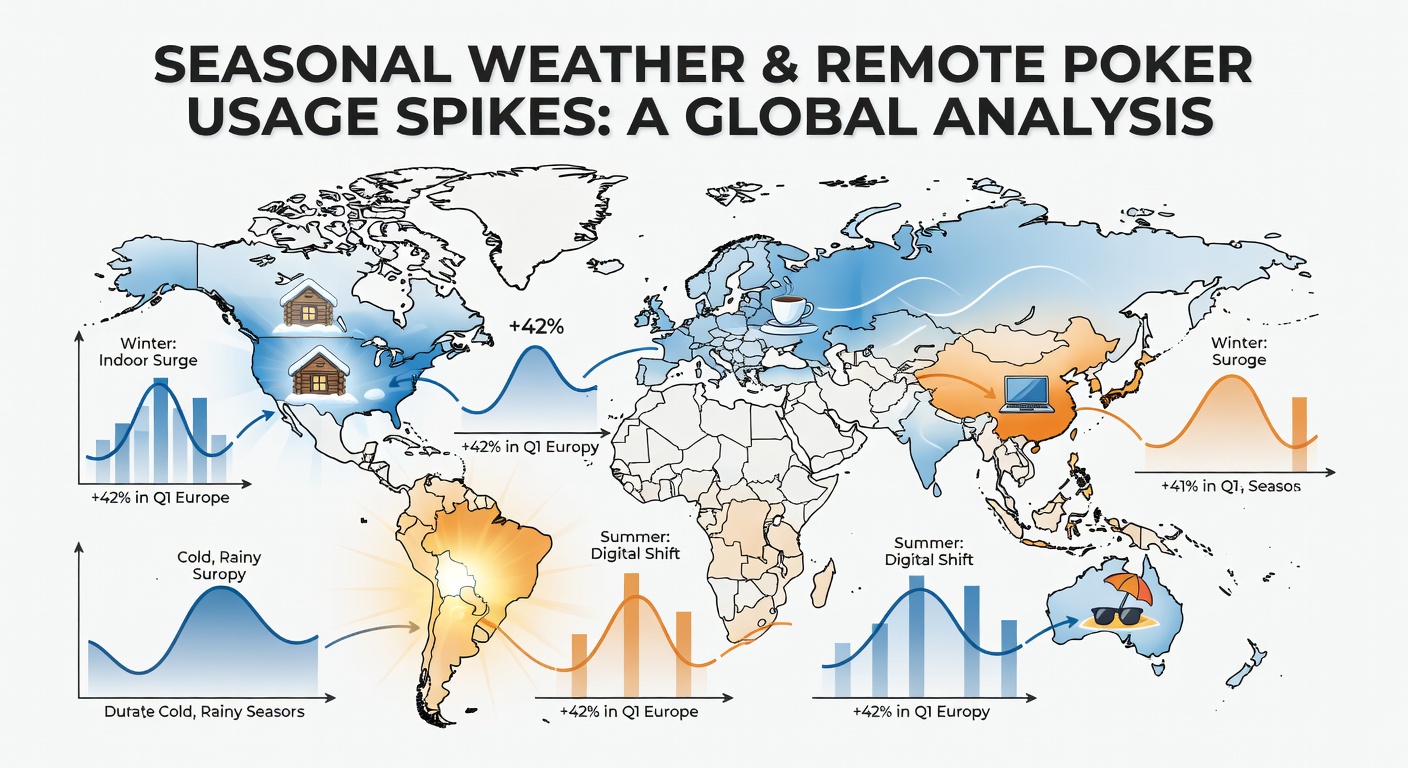
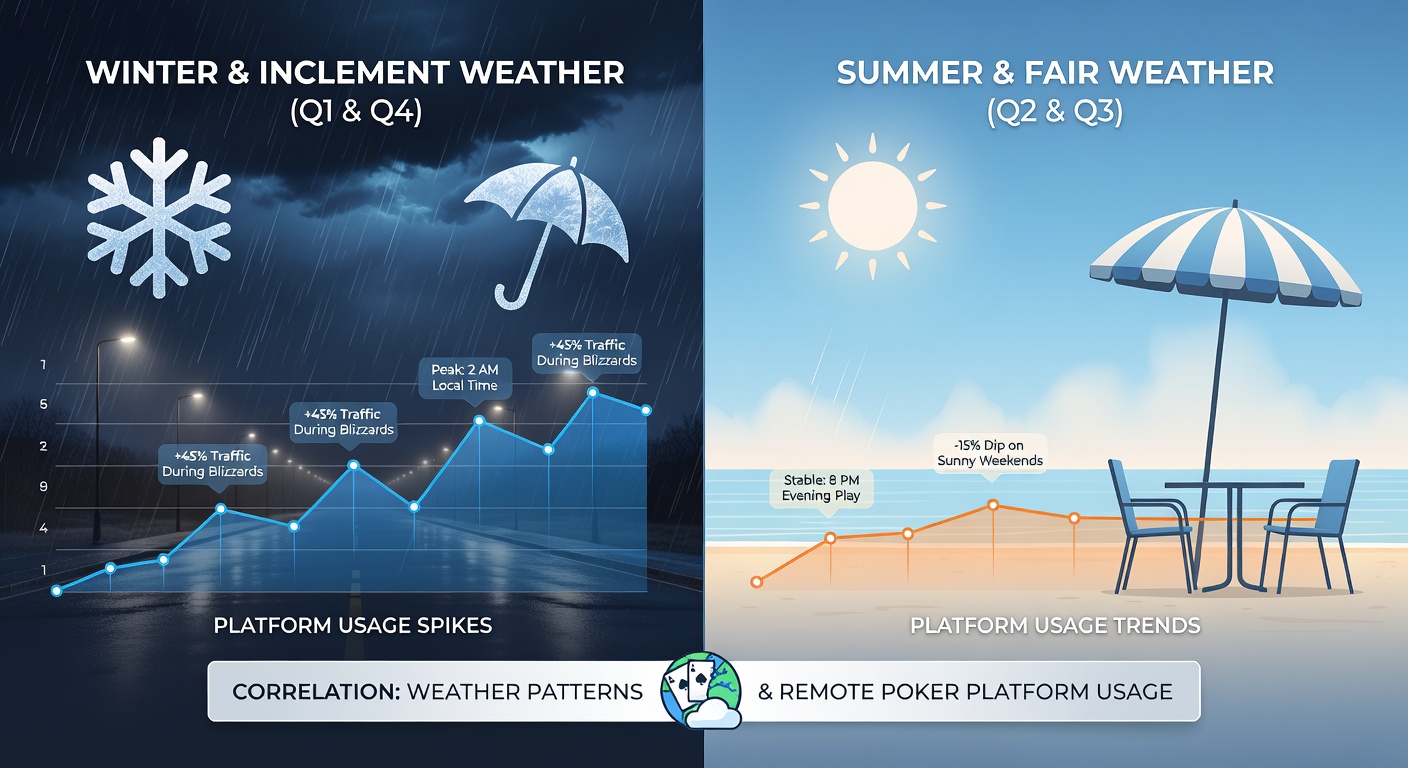
Seasonal weather patterns drive measurable shifts in remote poker platform activity as players seek indoor entertainment during periods of extreme conditions and researchers track these trends through aggregated usage data from multiple regions. In North America winter storms often coincide with increased logins on digital card platforms while summer heatwaves produce similar effects in southern states where air conditioning keeps users at home and connected to online tables.
North American Patterns During Winter Months
Data from major platforms reveals consistent spikes in North American engagement when temperatures drop below freezing across the Midwest and Northeast with sessions extending longer during blizzards that disrupt outdoor plans. Canadian operators report parallel increases during harsh prairie winters whereas coastal areas show milder correlations tied more to rainfall than snow accumulation.
European Trends and Regional Variations
European markets demonstrate comparable dynamics during prolonged rainy seasons in the United Kingdom and Scandinavia where indoor leisure activities rise notably and platforms experience sustained traffic growth through autumn and winter quarters. Southern European countries see different peaks tied to summer heat rather than cold with users logging in during afternoon hours when temperatures exceed comfortable outdoor thresholds.
Asian and Australian Correlations
Monsoon seasons across parts of Asia correlate with elevated remote poker usage as heavy rainfall confines residents indoors for extended periods while platforms note higher participation rates in affected urban centers. Australian data shows opposite seasonal timing with summer heat and bushfire warnings driving increased platform activity during December through February when many residents stay inside.
Researchers at the University of Sydney have documented these inverse patterns through longitudinal studies that link weather station records directly to anonymized platform metrics across hemispheres. The findings align with broader observations from the Australian Institute of Health and Welfare which tracks recreational behavior shifts during extreme weather events.
Data Insights from May 2026
By May 2026 spring conditions in the northern hemisphere coincided with declining usage in North American and European markets while autumn cooling in South America and parts of Africa produced measurable upticks on regional servers. Platforms serving multiple continents adjust server capacity in anticipation of these predictable transitions based on historical weather forecasts and usage modeling.
Cross-Continental Analysis
Comparative studies highlight how temperate zones experience the strongest weather-usage links whereas tropical regions show steadier baselines with smaller spikes during heavy storm systems. Observers note that these patterns hold across different platform types though mobile applications capture a larger share of weather-driven sessions compared to desktop clients.
Industry reports from the Canadian Gaming Association and academic papers published through European research networks provide supporting datasets that quantify these relationships through statistical correlations between meteorological records and login timestamps. Such evidence allows operators to forecast demand more accurately and allocate resources accordingly.
Conclusion
Weather remains a consistent external factor influencing remote poker engagement across continents with each region displaying unique seasonal signatures tied to local climate conditions. Continued monitoring through 2026 and beyond will refine these correlations as more granular data becomes available from expanding platform networks and improved weather tracking systems.